
Theses Management System
Designed and developed a browser-based thesis management system for the University of Tehran’s Department of Industrial Engineering. The deployed system managed advisor selection and capacity allocation, proposal submission, review, revision, and approval through role-specific workflows for students, faculty members, and administrators.
- UML workflows and roles
- System architecture
- ASP.NET, C#, SQL Server
- End-to-end development
- University-hosted, 2014
- Deployment
Identifying the problem
While completing my master’s degree at the University of Tehran, I identified recurring problems in the Department of Industrial Engineering’s thesis administration process. Students faced an approval process that was difficult to understand. Administrators could not reliably monitor how much supervision capacity each faculty member had used, and paper proposals were difficult to locate, review, and track across repeated revisions.
Proposal approval could involve several academic and administrative participants. Rejections required students to revise their work and restart part of the review sequence, but the physical process provided limited visibility into a proposal’s current status or history.
I proposed a web-based information system to represent these processes explicitly and give each participant access to the actions and information relevant to their role.
My role and contribution
I originated the project and was its sole software developer. I worked with the graduate studies manager to analyze the department’s procedures, responsibilities, and approval rules. I then independently designed and implemented the system.
My work included requirements analysis, use-case and actor modeling, workflow and state-transition design, relational database architecture, server-side business rules, role-based access control, application development, testing, installation, and deployment. I completed the work under a paid arrangement with the department.
The project therefore involved more than implementing a supplied specification. I first identified the administrative need, translated the existing process into a system model, and carried that model through to an operational application.
The system
The Theses Management System was a browser-based application developed with C# and ASP.NET, backed by SQL Server 2008. It served the Department of Industrial Engineering within the University of Tehran College of Engineering, now the School of Industrial Engineering.
The system distinguished among students, faculty members, departmental staff, system administrators, academic program heads, graduate studies management, and senior academic approvers. Permissions limited each user to the information and functions associated with their assigned role.
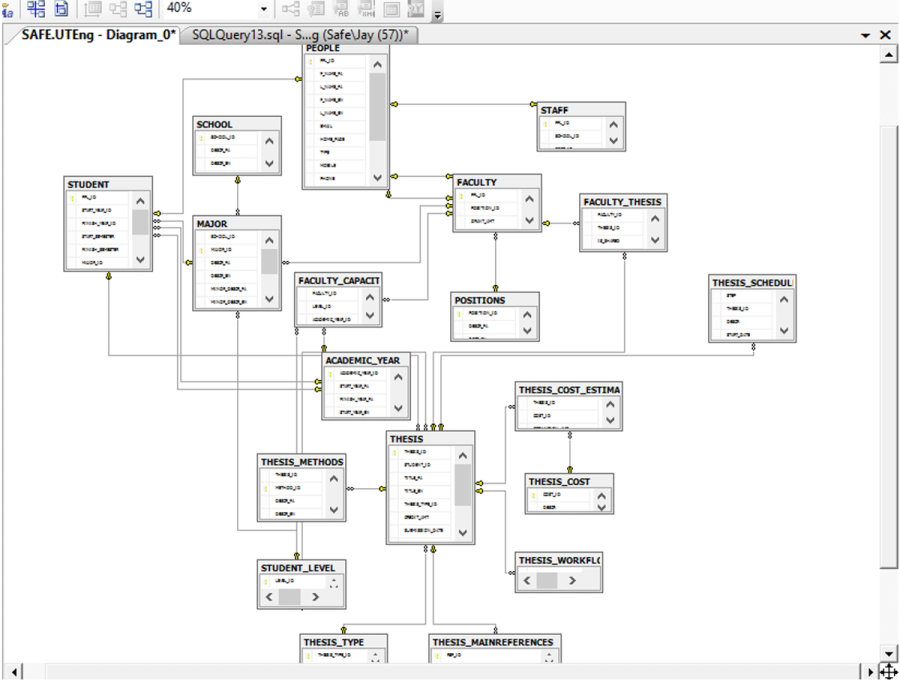
Its relational model connected students, faculty members, academic programs, academic years, thesis records, advisor assignments, supervision capacity, proposal workflows, schedules, progress states, methods, costs, and references.
Advisor capacity and assignment
One operational problem was the allocation of students among advisors with different approved supervision quotas. The system recorded each advisor’s available capacity and incorporated that information into the assignment process.
I implemented a database-level control that prevented a thesis assignment from exceeding the advisor’s authorized capacity. This placed an important institutional rule inside the transaction itself, reducing reliance on staff remembering to check capacity separately.
The May 2014 presentation records capacity allocation as implemented. Advisor selection was still being completed at the time of that presentation and formed part of the subsequently deployed system described in my account.
Proposal review and revision
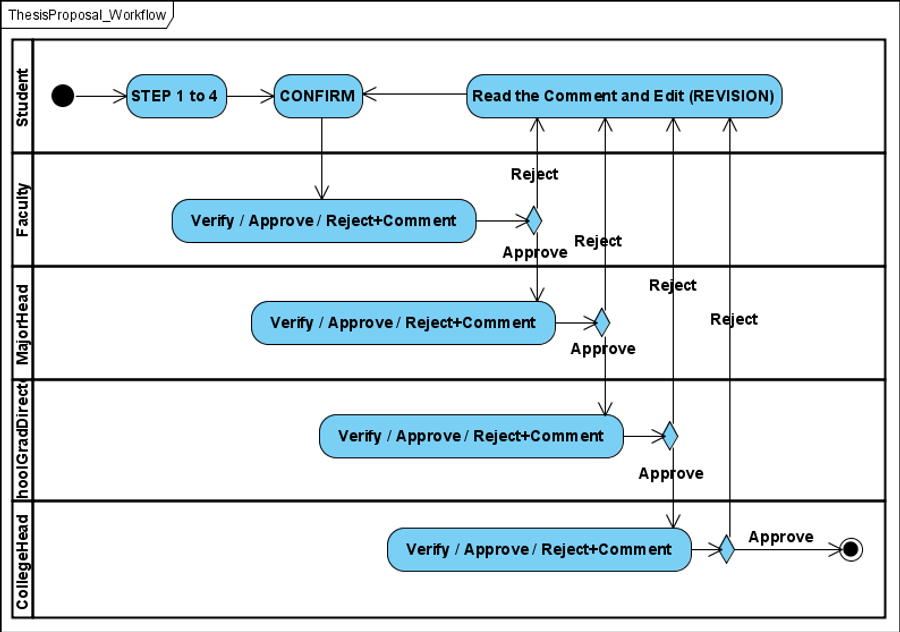
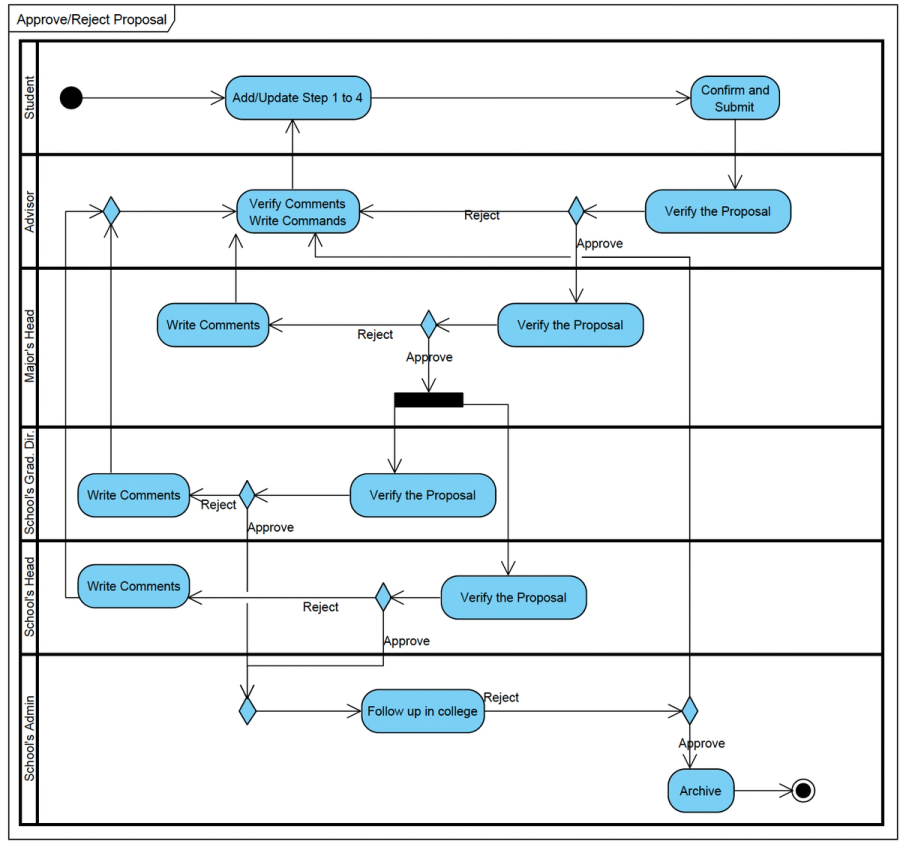
The proposal workflow allowed a student to enter the required proposal information, confirm the submission, and send it for review. The process could include a primary advisor, an optional second advisor, the head of the relevant academic program, graduate studies management, and school or college approval.
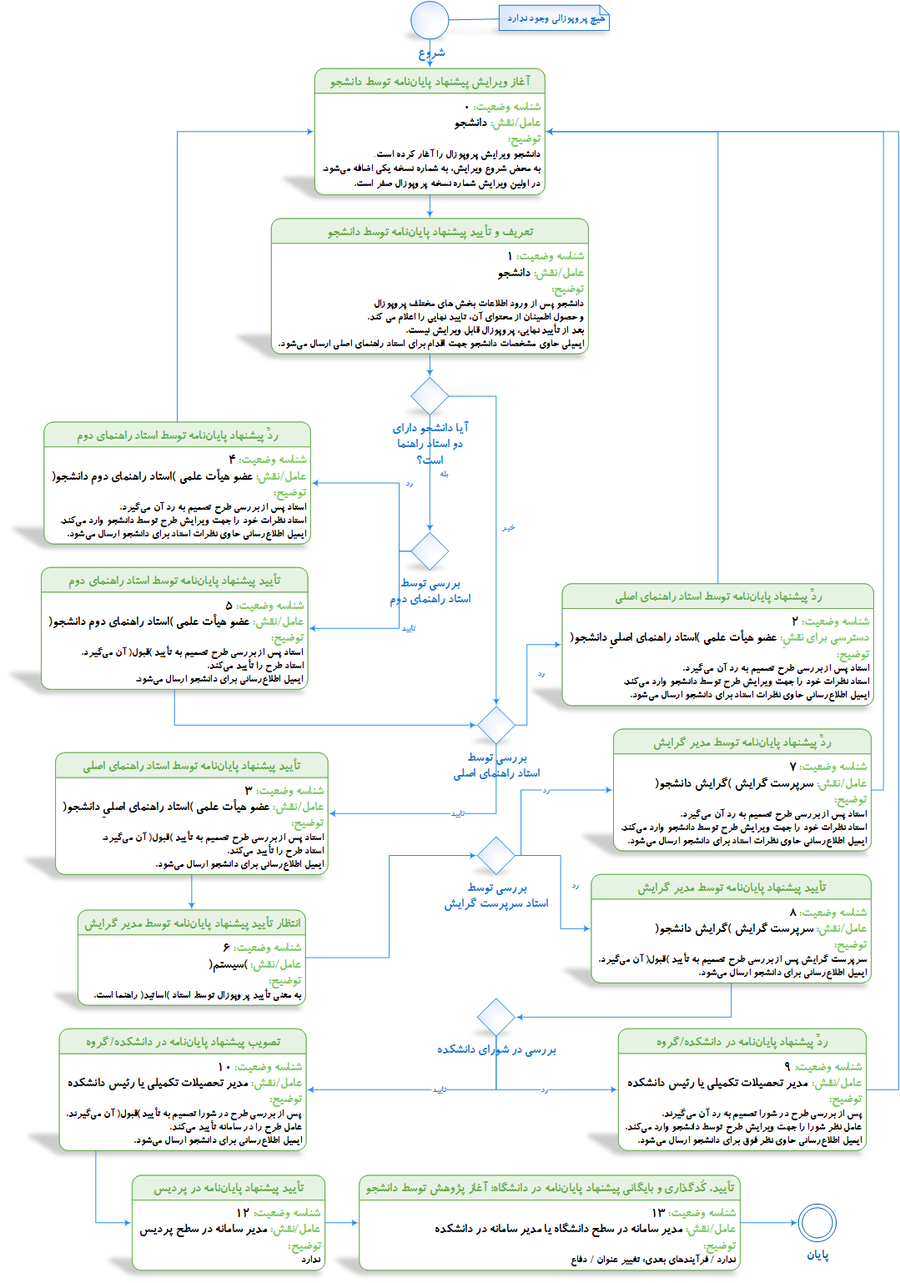
Each reviewer could approve the proposal or reject it with comments. A rejection returned the proposal to the student for revision while preserving the process state. After the required approvals, the system could archive and lock the accepted proposal.
The supporting process models document the participating roles, approval sequence, rejection paths, revision loops, and numbered proposal states. By May 2014, proposal definition and approval had been implemented and tested successfully within the department.
Deployment and validation
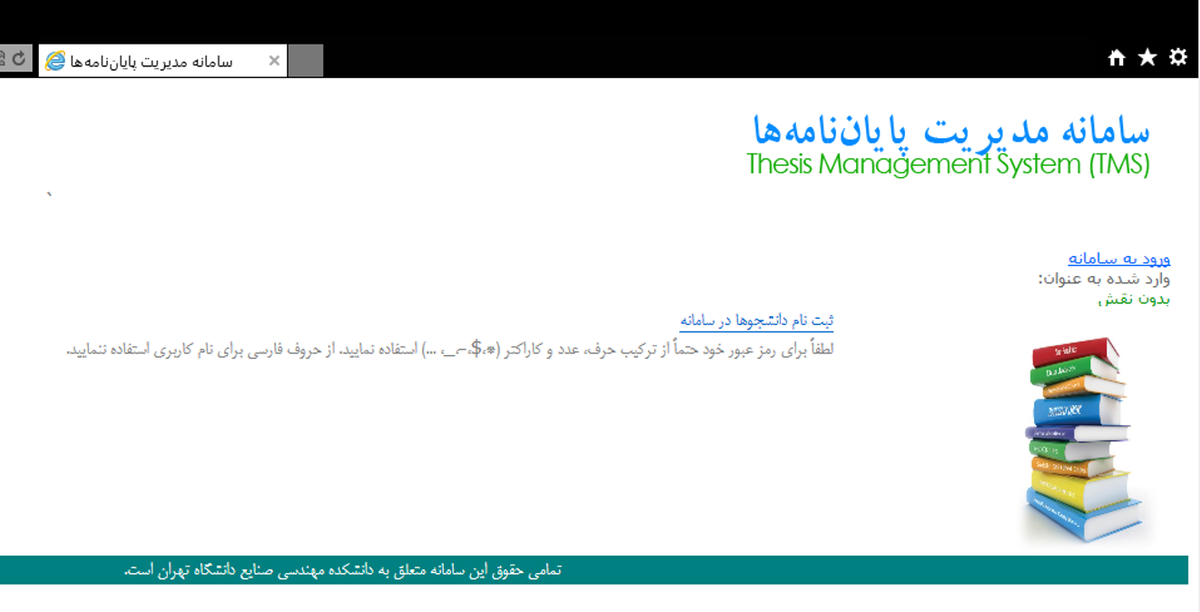
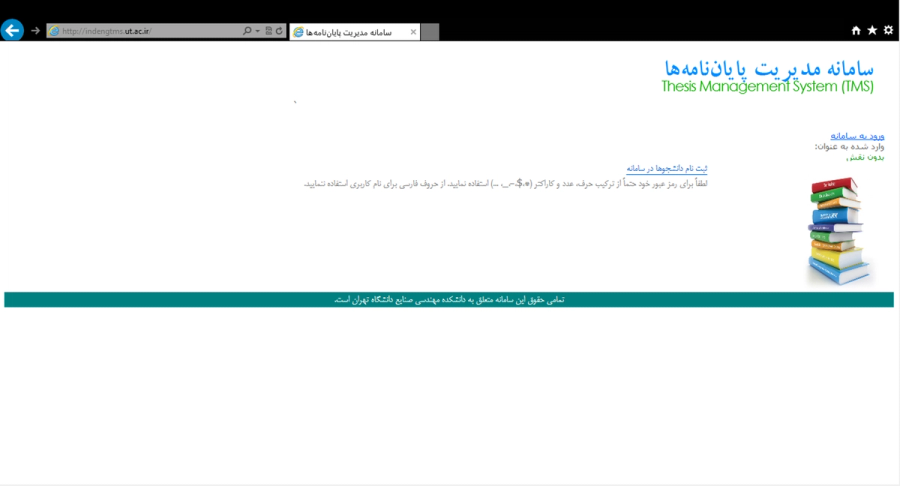
The May 2014 presentation includes the system’s web address and a screenshot of its working login page. It describes the system as installed on the web, tested successfully in the department, and designed around the department’s actual procedures.
The application subsequently entered operational use. Students, faculty members, and administrative personnel used it for advisor-related administration and proposal processing.
The materials also contain a broader lifecycle model extending from proposal approval through progress reporting and thesis defense. At the time of the May presentation, however, the defense workflow remained under design. I therefore do not present defense management as a confirmed production capability.
Continuity and current status
I left Iran in July 2014 to begin my PhD. The system continued operating after my departure but was later discontinued. The precise date and reason are no longer recoverable.
The project documentation had already identified continuity as a risk because design, implementation, maintenance, and troubleshooting depended on one developer. It recommended transferring the source code to a trusted support organization. The materials do not establish whether that handoff occurred, and it would be speculative to attribute the system’s discontinuation to this dependency.
Integration with the university’s central Golestan education system was also identified as future work. The available evidence does not show that this integration was completed.
Why this project matters
This project demonstrates my ability to identify an institutional problem, analyze a process with its stakeholders, and independently deliver an operational information system. It required translating academic policies, responsibilities, approval sequences, and capacity constraints into a coherent data model and enforceable application behavior.
It also provided an early practical lesson in system ownership: technical delivery alone does not ensure continuity when an organization lacks a durable plan for maintenance and knowledge transfer.
Figures
Discuss an Industry or Research Problem
I collaborate with asset-intensive organizations, research teams, and technical founders on problems involving maintenance, fleets, reliability, asset lifecycle, operational modeling, and system architecture.
If your organization has data, analytical models, or technical capability but still lacks a usable decision system, I would be interested in understanding the problem. Schedule a 20-minute introductory conversation to discuss the problem, its current constraints, and whether there is a useful basis for collaboration.